
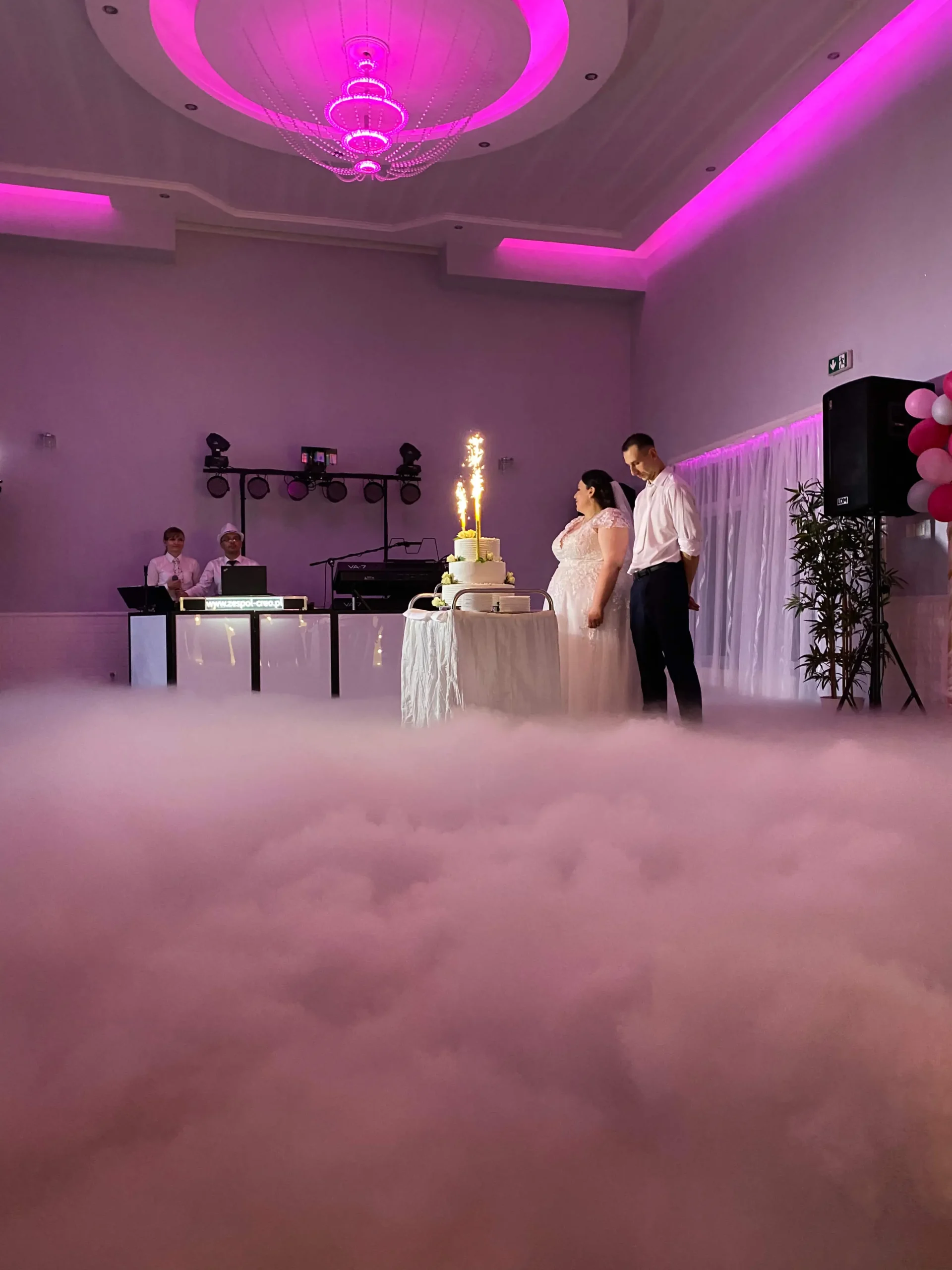
"Fog" is really three different effects, and choosing the wrong one is the most common mistake we see at events. The right pick depends on your venue, your timing and the photo you are chasing. Here is the short, practical version.
Regular fog
A dense, rising cloud that fills a space. It is dramatic for entrances, reveals and Halloween scenes — but it rises, spreads and can drift toward ceiling smoke detectors. Great outdoors or in tall, well-managed venues; riskier in low-ceiling halls.
Low fog (dancing on clouds)
Low Fog creates a cloud close to the floor; regular fog adds atmosphere higher in the space. Venue requirements and equipment placement need to be confirmed for either effect.
Haze
The lightest of the three. You barely see haze itself; what you see is light. Haze is what makes beams, lasers and stage lighting visible, which is why concerts and music videos rely on it. If your goal is lighting and atmosphere rather than a visible cloud, haze is the answer.
Quick decision guide
- First dance or floor-level magic → low fog.
- Big entrance or dramatic reveal → regular fog (check ceiling height and alarms).
- Make the lighting pop on camera → haze.
- Indoor venue with strict fire rules → ask the venue to approve the specific effect, including low fog or haze, before booking.
- Outdoor stage or festival → discuss wind, visibility, placement and event restrictions before choosing an effect.
The questions that actually decide it
Before booking, tell us your venue, the available space and the moment you want to create. Ask the venue about its approval process, alarm system, ventilation and any restrictions on atmospheric effects. We review the selected setup with your organizer; low fog and haze should not be assumed exempt from venue rules.